
"South Africa coffee regions"
700 article(s) found

Coffee Basics The effect of altitude on coffee flavor
The impact of location on coffee bean flavor is profound. All coffee is grown in the tropics, and the altitude at which it is grown has a profound effect on the taste of coffee. The equatorial regions of the tropical belt, which extends from 30 degrees north latitude to the southern mountains, produce the world's truly premium Arabica coffee. Central and South America, South Asia and some Pacific islands, South Central Africa is also the world's most important
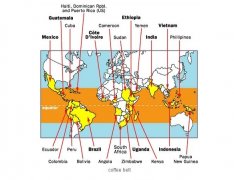
Where do coffee beans come from? The production zone of boutique coffee beans
Coffee trees need high altitude, tropical climate and fertile soil to grow the best coffee beans. Such climatic conditions on earth surround the equator, about 25 degrees north latitude to 30 degrees south latitude. In addition to location, there are many other factors that affect the quality of coffee: planting methods, soil fertility, weather, especially rainfall and light, and exact latitude.

Ethiopian Coffee Manor with rich nutty flavor and taste characteristics
Ethiopia is located at 6 ~ 9 degrees north latitude and 34 ~ 40 degrees east longitude. It is located in the center of the Horn of Africa and is a landlocked country. It is bordered by Djibouti and Somalia to the east, Sudan to the northwest, Eritrea to the north and Kenya to the south. [5] there are mainly mountain plateaus in Ethiopia, and most of them belong to the Ethiopian plateau. The central and western regions are the main body of the plateau, accounting for the whole territory.

If you don't understand the regional flavor and characteristics of individual coffee, don't say you know coffee.
Professional coffee knowledge exchange more coffee bean information Please follow the coffee workshop (Wechat official account cafe_style) as people in the coffee industry, one of the questions we are most often asked is: which kind of coffee do you like best? The answer that ordinary people can think of may be Cappuccino or Cafe Latte, but in fact, in most relationships

The earth smells like coffee! Let's popularize the main producing areas of coffee!
The distribution of coffee 1. Coffee growth is mainly distributed in the tropics with the equator as the center and latitudes between 25 degrees south and north. two。 World: coffee is grown in more than 70 countries. The main coffee growing areas are Central and South America, Africa, Asia and Indonesia. 3. China: mainly distributed in Yunnan, Hainan, Taiwan, Guangdong, Panzhihua, Sichuan

The flavor and taste of Ugandan coffee the characteristics of fine coffee in manor area introduce Ugandan coffee.
It is well known that coffee originated in Ethiopia, the earliest Arabica variety, while Robusta originated in Uganda, both of which are from Africa. As the hometown of coffee, Africa not only has many excellent coffee varieties, but also is still one of the three largest coffee producing areas in the world. The flavor and taste of African coffee is the most complex.
History of Coffee in Arab East Africa
[Ethiopia] the highlands of Ethiopia are the birthplace of coffee. The traditional drying method is still used to produce mocha-Hara beans (Harrar,Harari,Harer or Harar) at an altitude of about 2,000 meters near Harrar in the east. Hara has a medium texture and a fruit wine-like flavor, and a good Hara is as wild as the best Yemenmoka.

Introduction to the characteristics of fine coffee beans in Rwanda coffee flavor and taste manor area
Rwanda is located in the south of the equator in east-central Africa, a landlocked country. It is bordered by Tanzania to the east, Burundi to the south, Zaire to the west and northwest, and Uganda to the north, with a land area of 26338 square kilometers, ranking 149th among all countries in the world and close to Burundi, Macedonia, Haiti and Albania. Rwanda is located in east-central Africa, bordered by the Democratic Republic of the Congo to the west.
Coffee training knowledge: the effect of altitude on coffee flavor
The influence of geographical location on the flavor of coffee beans is profound. All coffee grows in the tropics, and the altitude at which it grows has a profound effect on the taste of coffee. The tropical belt extends from 30 degrees north latitude to the equatorial regions of the southern mountains that produce the world's truly high-quality Arabica coffee. Central and South America, South Asia and some Pacific islands, south-central Africa is also the most important in the world.

Effect of Coffee Bean planting altitude on Coffee Flavor
The influence of geographical location on the flavor of coffee beans is profound. All coffee grows in the tropics, and the altitude at which it grows has a profound effect on the taste of coffee. The tropical belt extends from 30 degrees north latitude to the equatorial regions of the southern mountains that produce the world's truly high-quality Arabica coffee. Central and South America, South Asia and some Pacific islands, south-central Africa is also the most important in the world.

Introduction to the characteristics of Flavor description of Coffee Solar treatment by Natural Water washing
Ethiopian coffee beans introduce that the most sensible and practical way to understand the countries that produce coffee is to classify them into three major coffee growing areas in the world: Africa, Indonesia and Central and South America. Generally speaking, coffee grown in the vicinity has similar characteristics. If a particular bean is out of stock, the manufacturer and buyer of the comprehensive product will usually look for a nearby country.
Cross-strait coffee gives you 5 minutes to understand the origin of coffee.
There are all kinds of legends about the origin of coffee, but most of them are forgotten because of its absurdity. People will not forget that Africa is the hometown of coffee. Coffee trees are likely to be found in Ethiopia's KAFFA province. Later, batches of slaves were sold from Africa to Yemen and the Arabian Peninsula, and coffee was taken everywhere along the way. That's for sure.
Commercial coffee bean grinder market 2019: global industry share, scale, major suppliers
The Commercial Coffee Bean Grinder Market Research report 2015-2024 provides the latest industry data and future industry trends, enabling you to identify products and end users, thereby driving revenue growth and profitability. The commercial coffee bean grinder market report helps businessmen / investors avoid unpleasant surprises. Intuition and experience may sometimes help, but research and facts can often be more accurate.

What are the three major coffee producing areas in the world? Arusha Coffee Estate
Mexican coffee production is concentrated in the southern part of Guatemala, and mountains run through it on both east and west sides, making its mountains inclined and ideal for coffee cultivation. Coffee cultivation is still common. From the highland, it is classified into Aldera, Prima, Labad and Barnlabad in order. Coffee bean size from medium to large grains are available, appearance, aroma
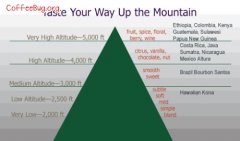
The relationship between altitude and Coffee Flavor
The influence of geographical location on the flavor of coffee beans is profound. All coffee grows in the tropics, and the altitude at which it grows has a profound effect on the taste of coffee. The tropical belt extends from 30 degrees north latitude to the equatorial regions of the southern mountains that produce the world's truly high-quality Arabica coffee. Central and South America, South Asia and some Pacific islands, south-central Africa is also the most important in the world.
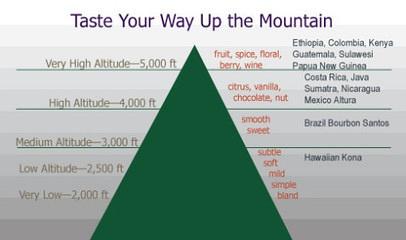
Effect of altitude on Coffee Flavor
The influence of geographical location on the flavor of coffee beans is profound. All coffee grows in the tropics, and the altitude at which it grows has a profound effect on the taste of coffee. The tropical belt extends from 30 degrees north latitude to the equatorial regions of the southern mountains that produce the world's truly high-quality Arabica coffee. Central and South America, South Asia and some Pacific islands, south-central Africa is also the most important in the world.

The characteristics of Yunnan Tibica / Tieka how to drink Dibica coffee with bean flavor?
Professional coffee knowledge exchange more coffee bean information please follow the coffee workshop (Wechat official account cafe_style) Coffee is suitable for growing in subtropical and tropical areas, with the equator as the center and 25 degrees north and south latitude ring area. The growth of coffee is mainly distributed in five regions, and the flavor and taste characteristics of coffee beans are different in different regions. The coffee grown in different regions is

Introduction to the difference of coffee flavor between Ethiopian hole washing method and sun treatment method
Country: Ethiopian Manor: Konga Cooperative producing area: Yejia Chevy Variety: Ethiopian Native species treatment method: washing Cup Test report: cup Test record: the Conga Cooperative (Konga Coop) is made up of 1556 family members of small coffee farmers, located 5 km south of Yirgacheffe. It was founded in 1994 and joined the YCFCU Cooperative Union in 2002.

Introduction to the roasting degree, taste characteristics and flavor description of Ugandan coffee beans
The roasting degree of Ugandan coffee beans, taste characteristics, flavor description region description: Ugandan product model: AA.A2.BP.B4.CS Organic Uganda Burkinsu uganda bugisu AA 18 mesh Uganda is a landlocked country in eastern Africa, across the equator, east by Kenya, south by Tanzania and Rwanda, west by Congo (Kinshasa), north by Sudan. Most of the territory is located in the middle.